Showing posts with label theology. Show all posts

15 July 2008

Faith and Reason - Richard Swinburne

faith.and.reason

Product Description

Richard Swinburne presents a new edition of one of his classic works on philosophical theology. Faith and Reason is a self-standing examination of the implications for religious faith of Swinburne's famous arguments about the coherence of theism and the existence of God. Swinburne analyzes the purposes of practicing a religion, and argues that religious faith requires belief that a particular creed provides the rationale for supposing that these purposes will be achieved. While maintaining the same structure and conclusions as the original, this second edition has been substantially rewritten, both in order to relate its ideas more closely to those of classical theologians and philosophers and to respond to more recent views.

About the Author

Richard Swinburne is at Emeritus Nolloth Professor of the Philosophy of the Christian Religion, University of Oxford.

http://rapidshare.com/files/129958407/kitap39.rar (951 KB, şifre: 39kitap9)

08 July 2008

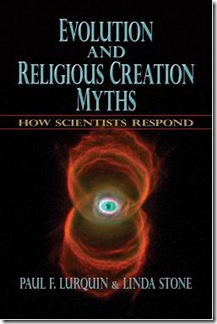
Evolution and Religious Creation Myths: How Scientists Respond

evolution.and.religious.creation.myths

Abstract for the book Evolution and Religious Creation Myths: How Scientists Respond by Paul F. Lurquin and Linda Stone

Intelligent Design thinking and older style creationism argue that evolution by natural selection is an incorrect theory. We demonstrate that, in doing so, neo-creationism (Intelligent Design, ID) and classical creationism misinterpret the meaning of scientific theories. This is because these religious doctrines imply teleology and purpose in the natural world, which are not analyzable scientifically. In addition, the concept of "irreducible complexity" often invoked by ID proponents is based on a flawed interpretation of scientific data. We also demonstrate that evolutionary thinking in the sciences is a powerful tool that can be used in the study of the origin of the universe, the origin of life and its diversification, and human evolution. Creationism and ID do not belong in the realm of science and have contributed nothing to its advancement. Further, attempts to force the teaching of creationism and ID in schools can only weaken a science curriculum which already leaves much to be desired.

Abstract for Chapter 1
We demonstrate that Intelligent Design can be called a form of neocreatonism that, just like old-style creationism, confuses the word "theory" with the words "postulate" and "fact." We also show that Intelligent Design implies purpose in the universe, a concept that science can neither support nor refute. We further describe creation myths as found in Buddhism, Hinduism, Islam and Judaism, and discuss how these myths influence scientific thinking in various societies.

Abstract for Chapter 2
This chapter describes the Darwin-Wallace theory of evolution by natural selection. In particular, we explain the notion of fitness, which underlies the concepts of descent with modification and the appearance of species categorized into clades. We show that descent with modification is a much better evolutionary theory than the "Great chain of being" model which implies that evolution is driven toward the production of more perfect and complex life-forms. Finally, we explain how the science of genetics strongly supports evolution through the notions of mutation, gene frequencies in populations, and drift.

Abstract for Chapter 3
Here, we rebut irreducible complexity and creationism by explaining the reliability of dating techniques as well as sophisticated laboratory techniques that allow researchers to synthesize extinct genes (genetic archaeology, gene resurrection) and study their homology to other genes. These techniques clearly demonstrate that the irreducible complexity of the eye, the immune system and the bacterial flagellum are subjective impressions. On the contrary, phylogenetic trees based on gene homology show a deep evolutionary link between simple life-forms and complex ones. Finally, we give several examples of "poor design" that cast doubt on the principle of Intelligent Design.

Abstract for Chapter 4
The notions of natural selection and drift also apply to humans and their biological and cultural evolution. The science of paleoanthropology explains human evolution through the study of intermediate fossil forms. In addition, geneticists have been able to retrace, through the study of mitochondrial DNA and Y-chromosome DNA, the origin and migrations of prehistoric humans.

The understanding of human cultural evolution has greatly benefited from the application of evolutionary thinking.

Abstract for Chapter 5
This chapter demonstrates that the origin of the universe was probabilistic, not preordained, because Heisenberg's uncertainty principle would have been violated at the level of the Big Bang. The appearance of structure in the universe was made possible by the decoupling of matter and radiation about 400,000 years after the Big Bang. Structure appeared--and continues to appear--without violating the second law of thermodynamics because entropy is not increasing as fast as it could, and this keeps the universe in a state of disequilibrium, not equilibrium. Life appeared as a consequence of this disequilibrium, possibly involving a sequence of events such as formation of an organic prebiotic soup (or synthesis of organic compounds in hydrothermal vents), the appearance of an RNA world, and the formation of lipid-bound hypercycles.

Abstract for Chapter 6
First life-forms appeared at least as early as 3.5 billion years ago in the form of prokaryotes. Some of these species developed oxygenic photosynthesis, which resulted in the presence of oxygen gas in the atmosphere. Later, eukaryotes appeared and diversified through mutation and gene duplication (including mutation and duplication of master genes), which led to the rewiring of entire gene networks. We show that there is no fundamental difference between macroevolution and microevolution. Finally, we show that making artificial life in the lab, as well as transgenic life-forms, would be impossible if the Intelligent Design scenario were correct. Indeed, ID posits that living systems were holistically designed and thus cannot be constructed in a piecemeal fashion.

Abstract for Chapter 7
Creationists and some conservative politicians are allies in a culture war that threatens science education in the United States. The threat comes from religious ideologies, such as Intelligent Design, that have never provided a shred of experimental evidence to buttress their claims. The proposition that evolutionary science is against human free will is baseless, and so is the contention that the theory of evolution deprives humans of purpose in life.

http://rapidshare.com/files/128151017/kitap37.rar (1742 KB, şifre: 37kitap7)

Evolution vs. Creationism: An Introduction - Eugenie C. Scott

evolution.vs.creationism

Judith Shulevitz in The New York Times Book Review

Scott could be said to be the one really doing God's work as she patiently rebuts people who make most other scientists spit gaskets like short-circuiting robots. Her book is both a straightforward history of the debate and an anthology of essays written by partisans on each side. Its main virtue is to explain the scientific method, which many invoke but few describe vividly. Scott also manages to lay out the astronomical, chemical, geological and biological bases of evolutionary theory in unusually plain English.

Anyone who wants to defend evolution at his next church picnic should arm himself with this book.

Kefyn M. Catley in Science Education (2006, vol. 90, no. 4, pp. 764-766)

Let me say at the outset that this is quite an extraordinary book, and one I predict is destined to become a classic. Eugenie Scott brings to bear her encyclopedic knowledge of the history of the conflict, passion for the subject, and deep understanding of the legal framework tempered by her long involvement as Executive Director of the National Center for Science Education. This work provides a well-balanced synthesis of the complexities of science, religion, jurisprudence, and education as they pertain to understanding the continuing dichotomy between evolution and creationism. Perhaps its greatest strength, however, is that all this information is so expertly brought together under one cover. ... This book provides a great service to the science community. There is much here for readers at all levels, from high school students and their teachers to university students and their professors, and yes, even for creationists. I recommended the book highly as a text or supplemental book for nature of science, science and society, or high school science methods courses.

David Sepkoski in Journal of the History of Biology (2006, vol. 39, pp. 607-635)

In her textbook Evolution vs. Creationism: An Introduction, Eugenie Scott sets out to provide, in a single, concise volume, an introduction to the basics of evolutionary theory, a summary of creationist critiques and straightforward refutations of those claims, and a survey of primary literature from both camps. Few people are as qualified to address evolution pedagogy as Scott, director of the National Center for Science Education, and the result is a tidy, cogent book that will undoubtedly find its way into many classrooms. ... While there is never any doubt about Scott's viewpoints, she wisely allows readers to work through the issues themselves, making for a much less polemical treatment than many of the other efforts here reviewed.

http://rapidshare.com/files/128147584/kitap36.rar (1328 KB, şifre: 36kitap6)

29 June 2008

Encyclopedia of Islam and the Muslim World

encyclopedia.of.islam

The reference literature for Islam has long consisted of either a densely academic, multivolume encyclopedia or several, often specialized, single-volume works with brief definitions. Happily, there is now a reference work falling between these two extremes. The Encyclopedia of Islam and the Muslim World is a scholarly work "about Islamic cultures, religion, history, politics, and the like as well as the people who have identified with Islam over the past fourteen centuries."

A team of international scholars is responsible for the 515 entries, which are arranged alphabetically and range from 200 to 5,000 words in length. Many include some sort of illustration and end with helpful see also references and excellent supplemental bibliographies. A useful index completes the set. Coverage includes the religious dimensions of Islam as well as the development of the tradition in various parts of the world (e.g., Africa, South Asia, U.S.). Cultural issues of importance to the history of Islam (e.g., architecture, calligraphy, language) are also treated. Entries such as Political organization and Political thought demonstrate the historical completeness for which the encyclopedia strives, tracing developments from the life of the Prophet to the present day. Even topics of contemporary interest include a historical perspective. The entry for Jihad describes the many meanings of the term, including its contemporary association with violence, and how the concept has developed historically. The treatment of secularization in the Muslim world includes a comparison to historical events in the West, thereby helping the reader to understand that it cannot be understood solely from a Western perspective. Finally, the biographical entries include important figures from the religious, cultural, and political history of the Muslim world.

http://rapidshare.com/files/125826373/kitap32.rar (26314 KB, şifre: 32kitap2)

18 June 2008

The Language of God - Francis S. Collins

language.of.god Review by Joe Duck

I enjoyed The Language of God, by Francis Collins, the head of the US government’s part of Genome project that unravelled the genetic blueprint of humanity.  But I’m afraid I did not like the book for the reasons Collins seemed to be hoping for. He was encouraging those with mechanistic and scientific perspectives to consider his “Theistic Evolution” as a way to reconcile scientific fact and a belief in God. As philosophy / theology I think the book was pretty weak - it was a thoughtful and heartfelt personal journey to a belief in God, but little more than that.

The subtitle promises evidence for belief but Collins offers anecdotes, personal feelings, and CS Lewis quotes. Fine, but for the reasons I go into below I want some gosh darn burning bushes, thank you, and think that without them his argument is very weak.

Collins does do an excellent job as scientist. First, he very effectively demolishes “young earth creationism” where proponents maintain the earth is less than 10,000 years old, as a very naive view. Next he tackles “Intelligent Design” and actually made me less sympathetic to this approach than I’d been before, suggesting it’s a “god of the gaps” hypothesis that is already wearing down in the face of increasing understanding of the Darwinian evolutionary processes it claims to challenge . To Collins the scientific evidence is overwhelming and clear - basic chemistry and physics plus Darwinian style evolution explain pretty much all the organisms on the planet. I’m comfortable with that view because I think it springs from a combination of common sense observations and reason.

Much of the book is summarized in Collins’ key notions of Theistic Evolution. I’m comfortable with the science stuff but I simply don’t understand two things that seem to resonate so strongly with him, and I think with many thoughtful people of faith. The first is that morality is a sign of God rather than a product of evolutionary and social forces over time. The second is that God has a personal relationship with humans and cares about us.   Here are my concerns about those two ideas: (click for full review)

http://rapidshare.com/files/118968578/kitap26.rar (1011 KB, şifre: 26kitap75025)

12 June 2008

Debating Design: From Darwin to DNA - William Dembski, Michael Ruse

debating.design Review by Dan D. Crawford

William Dembski, prominent leader of the Intelligent Design movement, and Michael Ruse, prominent defender of evolutionary theory, have teamed up to give us a rich collection of essays centering on the Design debate. While admitting that they are "at opposite ends of the spectrum", the editors agree that ID is a significant enough movement on the current scene, "if only culturally," that it "should not be ignored." (p.4) But cultural and social agendas, and defenses against them, are thankfully absent from this volume; the focus is on intellectual debate in which each side is supposed to present its best arguments so that each can know what the other is saying, and so that the reader "can quickly grasp the fundamental claims and counterclaims being made." (p.4)

The collection is also helpful in giving a background to the Design debate -- in Ruse's "Brief History" of the design argument and Angus Menuge's "Survey" of the ID movement; and also in Elliott Sober's useful analytical and historical discussion of the design argument -- especially the key claim that the design hypothesis is "more likely" than naturalistic alternatives.

But the main attractiveness of this book for this reader was the variety of viewpoints and issues that radiate out from the two central foci of evolution and design. The discussion ranges far beyond the claims and counterclaims of the two opposing theories. Indeed, there are four very different viewpoints represented about equally in the four sections of the book: I. Darwinism; II. Complex Self-Organization; III. Theistic Evolution; and IV. Intelligent Design, each with four or five contributors. (But one wonders, why is the theory that supposedly generates the whole debate put last? It should be first.) (click for full review)

http://rapidshare.com/files/118967111/kitap21.rar (1300 KB, şifre: 21kitap6765)

10 June 2008

Atheism: The Case Against God - George H. Smith

atheism.the.case.against.godReview by Michael Martin

This book is a hard hitting attack against belief in the Christian God as well as all other supernatural beings (called 'gods' in the book). Intended primarily for laymen and consequently relatively free from technical philosophical argument and jargon, this book might well be used in a beginning course in the philosophy of religion as a fair representation of contemporary atheistic thought. Students would, I believe, find it more provocative and challenging, than some other treatment that may be technically more sophisticated. The author's direct and forceful way of making his points has great appeal; clearly, it is a book written with deep intellectual passion.

However, there are some limitations to the book as an introduction to atheism and teachers of philosophy might wish to supplement it with other works. First, Smith's critical treatment of the standard arguments for the existence of God is incomplete. Variants of the cosmological and technological arguments are critically evaluated, but the ontological argument and other arguments for the existence of God are not considered. Second, the argument against the existence of God from the existence of evil is (by the author's own admission) not treated in depth. The author believes (incorrectly, I think) that relative to other difficulties with belief in God the problem of evil is not important (80). Third, arguments against the existence of God using some version of the verifiability theory of meaning are not developed at all. (click for full review)

http://rapidshare.com/files/118966755/kitap19.rar (730 KB, şifre: 19kitap2584)

05 June 2008

In Defense Of Atheism - Michel Onfray

Review by G. Charles Steiner

This book is beautifully, graciously and thoughtfully written. Conceptually clear and brilliant, Monsieur Onfray advocates philosophers, instead of priests, rabbis or mullahs, be our representatives. Who are these, his philosophers? The laughers, the cynics, the radicals, the atheists, the sensualists and voluptuaries, he writes, though he rarely names names.

I did find three names in the course of the book: Nietszche, Gilles Deleuze, and Jeremny Bentham (particularly Bentham's work, "Deontology").

Monsieur Onfray's analysis of Christian, Judaic, and Islamic faiths, all three united under the point of view of "hatred of life" (in conjunction with suppression of sex and advocacy of violence), is quite readable, fair, and clear. (Onfray does not himself in his book use the term "hatred of life" per se as a philosophical concept(a term I borrow from Schopenhauer), but his philosophic meaning nonetheless is abundantly and perfectly clear.)

He declares unmistakeably that Hilter was a Roman Catholic and the Catholic Church, without question, supported Nazism. Monsieur Onfray's analysis is such that Catholicism appears to be the worst evil suffered in the West thus far. However, in the discussion of the Muslim faith, Monsieur Onfray reveals how frighteningly violent it is, particularly should this faith get a good foothold in the West. (Shades of Sam Harris's point of view about Islam appear with "The End of Faith" as well with a good many other writers, including Mark Steyn's "America Alone.") (click for full review)

http://rapidshare.com/files/118965006/kitap18.rar (1086 KB, şifre: 18kitap1597)

The Cambridge Companion To Atheism - Michael Martin (Ed.)

Review by J. L. Schellenberg

This book is a reference work on atheism intended for students and nonspecialists. Its eighteen authors include eleven writers from philosophy, three from religious studies, and one each from sociology, anthropology, psychology, and law. Quite well organized, the book has three chapters on Background, nine on The Case Against Theism, and six on Implications. It is often interesting and stimulating, and contains a good deal of useful material. But its chapters are of uneven quality, and some will be tough going for beginners. The book also features some internal tensions (perhaps the inevitable result of such a diverse set of contributors). These tensions are not in themselves disturbing and could even be pedagogically useful. But they might have been acknowledged up front and better integrated into the overall flow of the book.

One of the questions that such a collection should obviously be expected to address is this: What is atheism? The editor, Michael Martin, tenders an irenic answer in his General Introduction: atheism can be positive (disbelief) or negative (the absence of belief), as well as narrow (disbelief or absence of belief specifically with respect to the personal God of traditional theism) or broad (disbelief or absence of belief with respect to all gods). This explication is not entirely unattractive. One remembers, for example, that A. C. Grayling, an atheist if ever there was one, is in his new book not just against the God of traditional theism but Against All Gods. But the idea of negative atheism is not easy to accept (at least for me). Martin says that in Greek a can be read as 'without' and theos means 'god', and hence there is linguistic warrant for thinking of atheists as those without a belief in gods. But his contributor on the Greek period (Jan M. Bremmer, 'Atheism in Antiquity') apparently disagrees, suggesting that one who was atheos would originally have been taken as being without gods or "godforsaken" (19), a notion that (as even the Psalmist knew) comports better with belief in the Divine than with nonbelief. And William Lane Craig ('Theistic Critiques of Atheism') points out that if simply the absence of belief in God makes one an atheist, then "even infants count as atheists" (70). Given such worries (and certain related ones I haven't space to point out), and because of the separate identity that another form of the 'absence of belief ' -- namely, agnosticism -- has in the last century clearly carved out for itself, it might have been better to stick with what Martin calls positive atheism, broad and narrow, in this volume. (click for full review)

http://rapidshare.com/files/118963388/kitap17.rar (5022 KB, şifre: 17kitap987)

02 June 2008

God is not Great - Christopher Hitchens

Review by Jim Walker

...In spite of these and many more minor flaws, I did enjoy Hitchens searing wit and sarcasm. He goes much further than Sam Harris and Richard Dawkins in debasing religion. Interestingly, many critics of Dawkins try to paint him as mean spirited and fundamentalist atheist, yet anyone who has ever read his books and seen his lectures and interviews knows that he comes off as thoughtful, kind and shows great humor. Hitchens, on the other hand, comes off as downright belittling, and I love it! About time, I say, but his belittling has good reason behind it. As Thomas Jefferson once wrote, "Ridicule is the only weapon which can be used against unintelligible propositions." Hitchens ridicules with wit, and I suspect that many of his put-downs will go over the heads of many religious people. For example, look how Hitchens reduces Aristotle's gods and the last remaining god of monotheism:

Aristotle, whose reasoning about the unmoved mover and the uncaused cause is the beginning of this argument, concluded that the logic would necessitate forty-seven of fifty-five gods. Surely even a monotheist would be grateful for Ockham's razor at this point? From a plurality of prime movers, the monotheists have bargained it down to a single one. They are getting ever nearer to the true, round figure.
When Hitchens writes about why heaven hates ham; the hazards of religion, in war, health, and politics; orthodox Jews that suck the bloody penises of little boys; and the false metaphysical claims of religion, the reader cannot fail to understand the poison of religion. Nor does Hitchens criticize only Christianity but he equally attacks Judaism, Islam, Hinduism, and Buddhism. All religions fall under Hitchens axe because superstitious thinking cannot possibly solve any of the worlds problems, and in fact, creates many of them. Anyone who holds to any of these religions will have to answer the many questions that Hitchens poses, most of which probably never even occurred to them. For this reason alone, anyone who owns a religious belief should read this book. (click for full review)

http://rapidshare.com/files/118962411/kitap15.rar (1318 KB, şifre: 15kitap377)

31 May 2008

Breaking the Spell - Daniel C. Dennett

Review by complete review
Daniel Dennett tries to present Religion as a Natural Phenomenon (as the subtitle has it) in this book. One of his central arguments is that the existence of religion (and the belief in god(s)) can be explained by (Darwinian) evolutionary theory, a meme that's really caught (and held) on.

Dennett's approach is emphatically scientific, as he considers religion as a 'natural phenomenon' and not as the divinely inspired super-natural institution that is so widely held to be beyond scientific inquiry. Much of the book is, in fact, devoted to merely justifying the approach, as Dennett worries that his audience may find it inappropriate, irrelevant, or even dangerous. (Dennett's first words are the warning that he is: "an American author, and this book is addressed in the first place to American readers" -- readers who apparently require special care and handling on the subject (something many of those who read drafts of the book apparently complained about).) (click for full review)

http://rapidshare.com/files/118960734/kitap10.rar (2100 KB, şifre: 10kitap34)

Atheist Universe - David Mills

Review by Leland Waldrip
Author David Mills quotes Thomas Jefferson, who, in a letter to John Adams, wrote "I apologize to you for the lengthiness of this letter; but I had no time for shortening it." This book lives up to author Mills’ promise in the introduction to challenge conventional wisdom and use extreme conciseness and clarity for his message. He describes his writing style as slow and deliberate, requiring years to complete the book. He wrote it after coming to question his reasoning for becoming a "born-again Christian evangelist."

With this book David Mills has delivered a coup d’etat to any thought of reconciling religion and science. Post-modernist apologies and attempts to bridge the gap between religion and science he gives no quarter. He very carefully and methodically attacks every religious argument outside the realm of human invention for the existence of a god. His favorite target is the irrationality of Christian belief and the Bible's contention of a young earth, Noah’s flood, Genesis genealogies, etc. One rather interesting point he made in an almost casual manner was an observation that the genealogies in Matthew and Luke of the New Testament describe (contradictory) detailed male lineages of Jesus back to King David, and thereby create a trap for the writers of those books: The virgin birth would preclude any blood relationship through Joseph, so how could there be a lineage between Jesus and David? In debunking the prophesy of the Bible, Mills describes an absence of accuracy, noting that as far as accuracy is concerned, the Bible is a non-prophet organization. (click for full review)

http://rapidshare.com/files/118959811/kitap8.rar (1504 KB, şifre: 8kitap13)

The God Delusion - Richard Dawkins

Review by PZ Myers

Science writers like Gould, Goodenough, Sagan, or Dawkins often aspire to communicate the wonder they feel at the beauty, complexity, and diversity of nature. It's a natural consequence of a career in science—perhaps even a prerequisite for one—to marvel at stars in the sky or strange creatures of the deep, or even the miracle of our own flesh. Great science writing tries to transmit that same sense of amazement to the reader. In return, all too often these writers are paid the backhanded compliment that they, who do not believe in spirits, are "spiritual;" that the joy they take in the universe is their "religion."

"But is religion the right word?" asks eminent Oxford scholar Richard Dawkins in his newest book, The God Delusion. Though the appropriation of the term may seem innocuous, in Dawkins's view it's part of a larger and more dangerous trend. His reply—"I don't think so"—sets the tone for the book. (click for full review)

http://rapidshare.com/files/118956439/kitap3.rar (1794 KB, şifre: 3kitap1)